Dishwasher Not Draining: What to Check First
Standing water in the dishwasher? Check the filter, the garbage disposal and the drain hose before you call. Here is how, and when it is time for a repair.
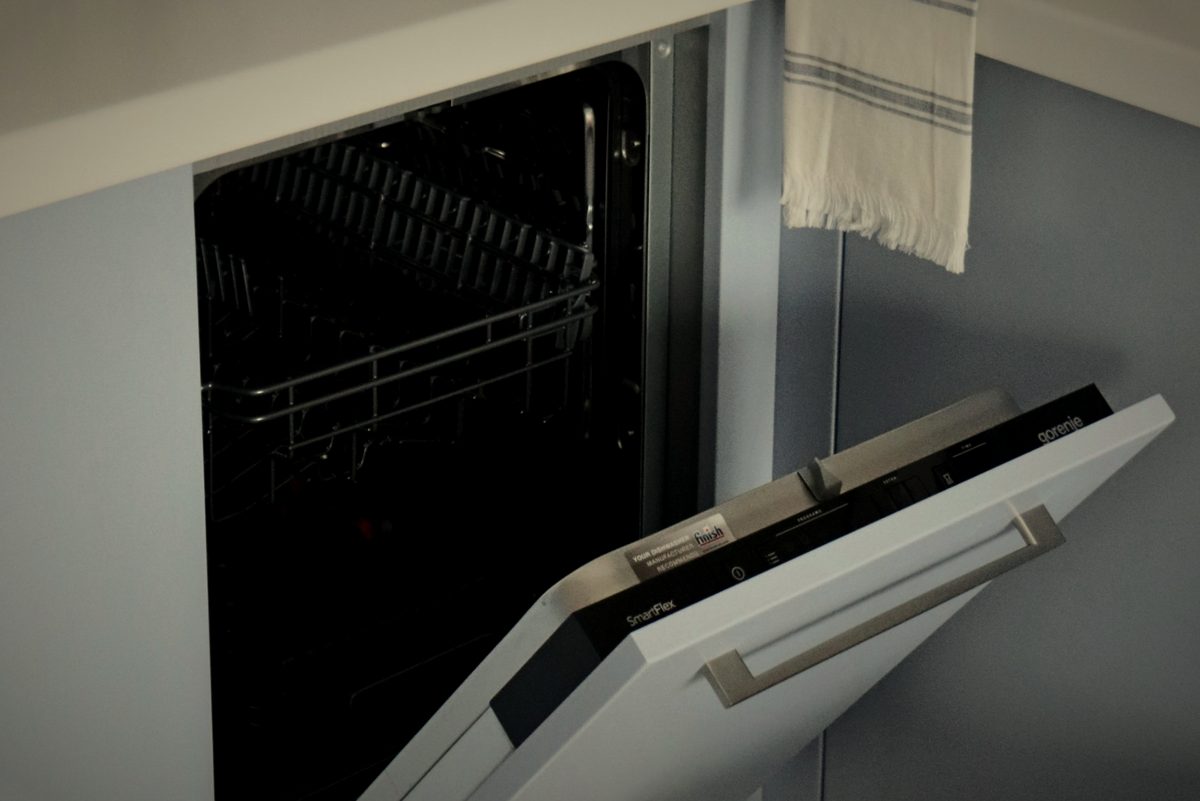
A little water left in the sump at the bottom is normal on many models. Inches of dirty water after a cycle are not. Most drain problems come from a clog somewhere between the filter and the sink.
Turn off power to the dishwasher at the breaker before reaching into the tub or under the sink.
Clean the filter
Most modern dishwashers have a removable filter under the lower spray arm. Twist it out, rinse it under hot water and scrub it with a soft brush. A clogged filter is the most common reason for standing water, and many owners never know it is there.
Run the garbage disposal
Most dishwashers drain through the disposal. Run the disposal for a few seconds to clear food that may be blocking the inlet. If the disposal was just installed, the knockout plug on the dishwasher inlet may never have been removed. That is a very common cause right after a new installation.
Check the drain hose
- Look under the sink for a kinked or crushed hose
- Make sure the hose rises in a high loop or connects to an air gap, which keeps sink water from flowing back
- If you have a countertop air gap, pop the cap off and clear any debris
Listen during the drain
A humming sound with no water moving often means the drain pump is jammed by glass or a seed, or the pump motor has failed. A completely silent drain cycle can point to the pump, wiring or the control board.
When to call a technician
If the filter, disposal and hose are clear and water still will not drain, the drain pump or a control is the likely cause. Error codes, leaks under the door and a burning smell are also reasons to stop using the dishwasher and book a repair.
Need a technician? $115 service call, free when we complete the repair. Open daily 8am–8pm.